Planning poker guide

Planning poker: a practical guide for agile teams

Planning poker is a collaborative estimation technique where team members discuss a work item, vote privately, reveal estimates together, and use differences as a prompt for better conversation. You may also hear teams call it scrum poker, pointing poker, or estimation poker.

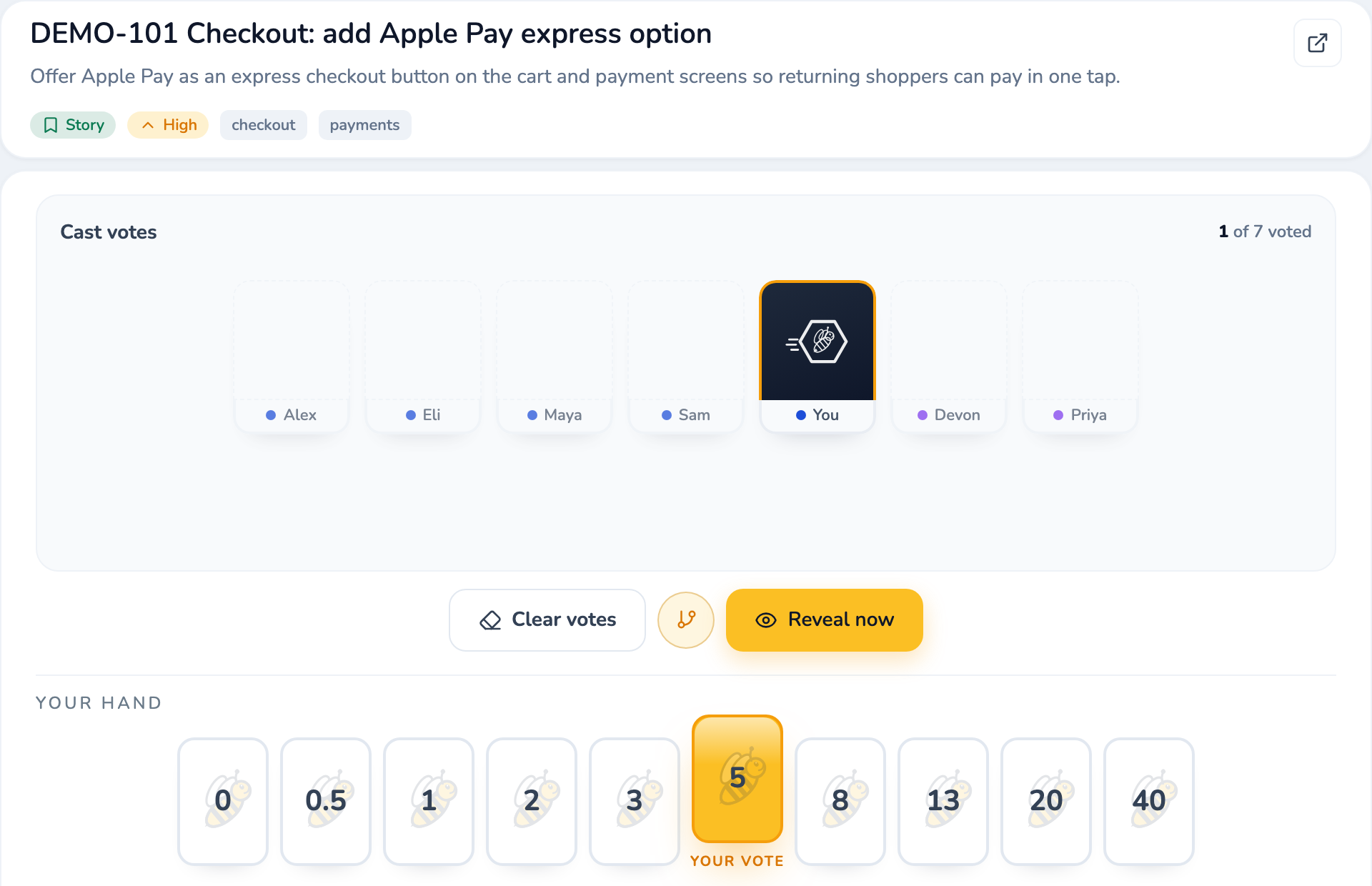
Discuss Vote Reveal

What is planning poker?

Planning poker turns estimation into a structured team conversation. Instead of asking one person for a number, everyone who understands the work gives an independent estimate.

Planning poker and scrum poker usually describe the same practice. The scrum poker name is common when teams use the technique during sprint planning or backlog refinement, while pointing poker is often used when teams estimate in story points.

The important part is not the card value by itself. The useful signal is where estimates differ, because that difference usually points to hidden complexity, missing context, or different assumptions.

How a planning poker round works

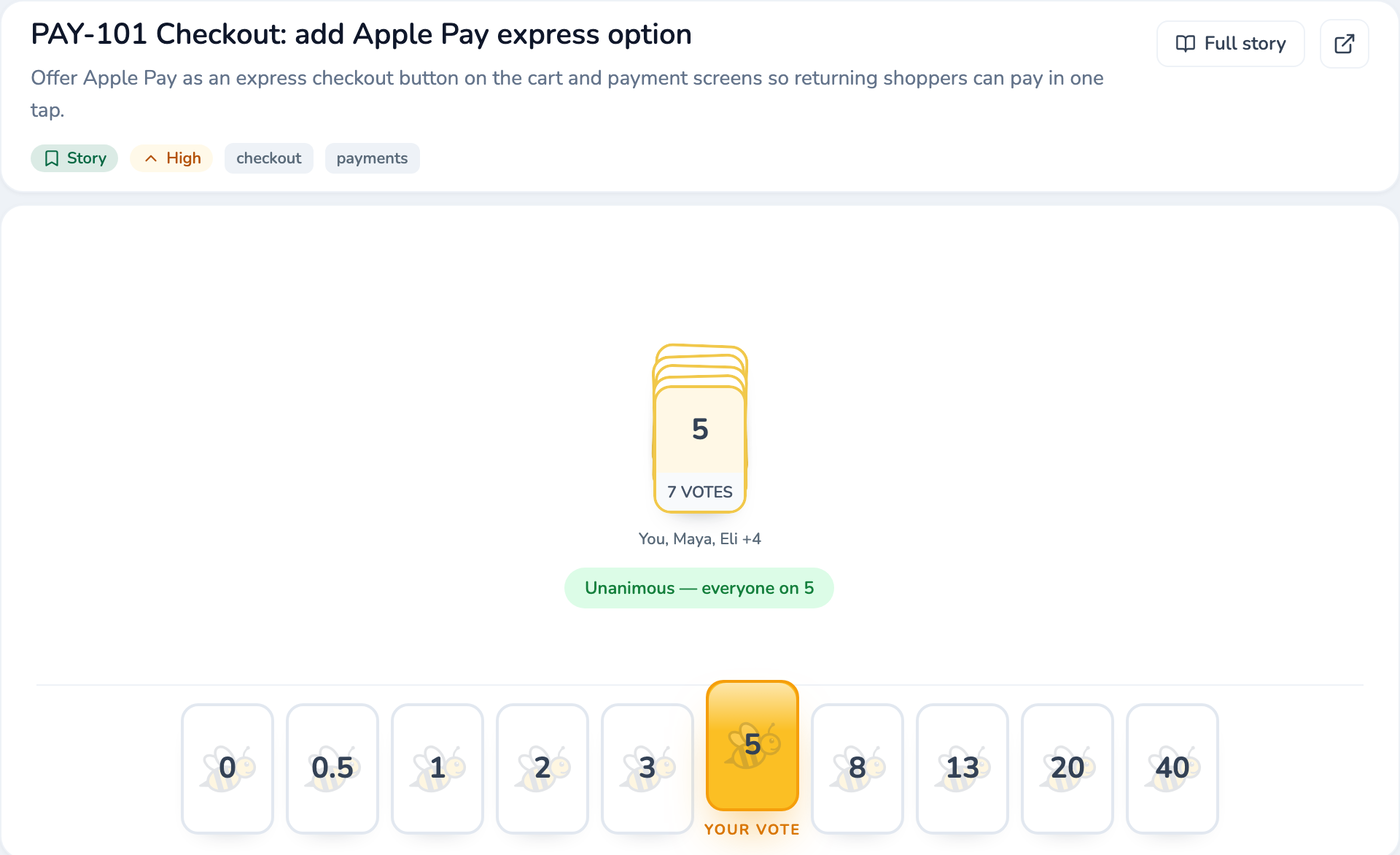
A lightweight planning poker round usually starts with a moderator presenting one work item and answering clarifying questions. Each participant then chooses an estimate privately, the room reveals votes at the same time, and the team talks through the biggest differences before recording an estimate.

The round should stay focused on shared understanding. If estimates are far apart, the goal is not to pressure everyone toward the middle. The useful move is to ask what each person noticed: hidden dependencies, missing acceptance criteria, implementation risk, test effort, design uncertainty, or a scope assumption that needs to be made explicit.

Why hidden voting matters

Private voting helps reduce anchoring, where the first visible estimate influences everyone else. When votes are revealed together, quieter team members get the same signal strength as louder voices.

That makes planning poker especially useful for remote teams, cross-functional teams, and groups that want estimation to invite discussion instead of pressure.

Choose a card deck that matches the work

The card deck shapes the kind of conversation your team has. Fibonacci-style cards are useful when uncertainty grows with size, T-shirt sizes are easier for early discovery, and custom decks can reflect the way your team actually plans.

The best deck is the one that helps your team make useful distinctions without creating false precision. For sprint planning, many teams prefer a Fibonacci or modified Fibonacci deck because larger items naturally become less precise and prompt more discussion.

Compare common estimation decks

Estimate together

Run your next planning session for free.

Create a SprintBee room, share one link, and help your team vote, reveal, discuss, and align in minutes.

Start free